Are Deepfakes Illegal? Deepfake Laws Around the World in 2026
Is making a deepfake a crime? A plain-language map of deepfake laws in 2026 — the US TAKE IT DOWN Act, the EU AI Act's labelling rules, UK, and what's legal, what isn't.
Short answer: deepfakes themselves aren’t illegal — specific uses of them are, and the list of illegal uses is growing fast. The technology that swaps a face for a film joke is the same technology behind intimate-image abuse and voice-clone fraud; the law targets the harm, not the algorithm.
Here’s the 2026 map in plain language. (This is an overview, not legal advice — statutes vary by jurisdiction and change quickly.)
The four harms the law actually targets
Almost every deepfake law in the world attaches to one of four harms:
- Non-consensual intimate imagery (NCII) — sexual deepfakes of real people. The most criminalised category worldwide, and the fastest-moving.
- Fraud and impersonation — voice clones and video fakes used to move money or credentials. Prosecuted under existing fraud law nearly everywhere; several jurisdictions have added AI-specific aggravations.
- Election manipulation — synthetic media of candidates. A patchwork of disclosure requirements and windows-before-election bans.
- Undisclosed synthetic media — a newer, broader duty: AI content must be labelled as AI, aimed at platforms and creators rather than individual harm.
United States
- The TAKE IT DOWN Act (federal, 2025) criminalises publishing non-consensual intimate images — explicitly including AI-generated ones — and requires platforms to remove reported NCII within 48 hours. This is the law that gives deepfake victims their fastest lever; the practical playbook is in what to do if someone makes a deepfake of you.
- State law does most of the remaining work: the large majority of states criminalise sexual deepfakes, and a growing set (California, Texas, Minnesota and others) regulate election deepfakes — typically disclosure requirements or bans in the weeks before a vote.
- Fraud with a cloned voice or face is prosecuted as fraud, wire fraud or identity theft; the FTC has also moved against AI impersonation of individuals and businesses.
- Civil routes (defamation, right of publicity, intentional infliction of emotional distress) run in parallel and don’t require a prosecutor.
European Union
The EU AI Act takes the labelling route: its transparency obligations — fully applicable from August 2026 — require that deepfakes be clearly disclosed as artificially generated or manipulated, and that AI systems mark their output in machine-readable form (in practice: C2PA-style provenance and watermarking — we explain that plumbing in Content Credentials (C2PA) explained).
Alongside it, the Digital Services Act obliges large platforms to act on illegal content and mitigate systemic risks — the hook used to force faster deepfake takedowns — and member states criminalise the underlying harms (NCII, fraud, defamation) under national law. The EU’s directive on violence against women, due in national law by 2027, requires criminalising non-consensual intimate deepfakes across the bloc.
United Kingdom
The Online Safety Act criminalised sharing intimate deepfakes without consent; subsequent legislation extended liability to creating them and requesting their creation. Fraud, harassment and stalking statutes cover the rest. Platforms carry proactive duties to prevent this content circulating — which is why UK reporting lanes tend to move quickly.
Elsewhere in brief
- China has the strictest labelling regime: deep-synthesis rules and 2025 AI-labelling measures require visible and embedded marks on synthetic media, with real-name obligations for providers.
- South Korea criminalises not just making and sharing sexual deepfakes but knowingly possessing or viewing them — the world’s hardest line.
- Denmark made headlines by moving to give every person copyright-like control over their own face and voice — a template other countries are watching.
- Australia, Canada, Japan and many others cover deepfake harms through NCII, fraud and defamation law, with dedicated bills advancing.
What this means in practice
If you’re a victim: the law is more on your side than most victims assume — especially for intimate imagery, where takedown duties are now statutory in the US, UK and EU. Preserve evidence first, then use the priority lanes; the step-by-step is here.
If you create or share AI content: the direction of travel is unambiguous — label it. Parody and satire generally remain protected, but undisclosed synthetic media of real people is becoming legally radioactive: NCII is criminal nearly everywhere, election fakes are restricted in wide parts of the world, and the EU’s disclosure duty lands in August 2026.
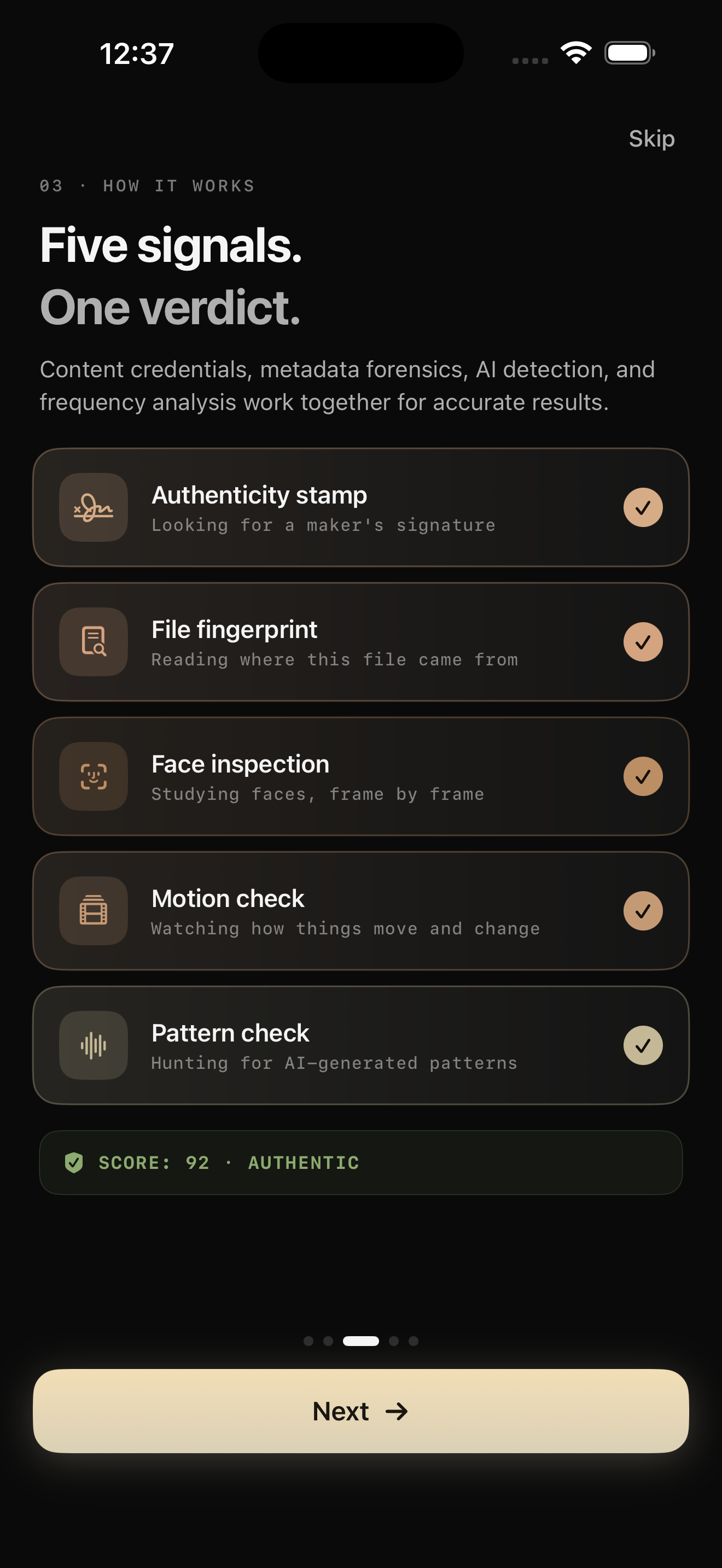
If you receive a suspicious video: the law punishes after the fact; it doesn’t protect you in the moment. A video of a politician, a CEO authorising a transfer, or a relative in distress deserves verification before you act on it or share it. That’s a forensics problem, not a legal one — Verifyco runs five independent forensic signals on your iPhone, on-device, and tells you how much the file can be trusted (how the analysis works).
Frequently asked questions
Is it illegal to make a deepfake of someone without consent? It depends on content and jurisdiction. Sexual deepfakes: criminal in most of the US, UK, South Korea and much of Europe — in the UK, even creating one is an offence. Non-sexual deepfakes: generally lawful to make, but using them for fraud, harassment, defamation or undisclosed political messaging is where the law bites.
Are deepfakes for parody or satire legal? Mostly yes — satire, parody and commentary enjoy strong protection in democracies, and the EU AI Act carves lighter treatment for evidently artistic or satirical works. The safe harbour shrinks fast when the fake is presented as real, sexual, or aimed at deceiving voters or customers.
Can I go to jail for sharing a deepfake I didn’t make? Yes, for some categories. Sharing non-consensual intimate deepfakes is a crime regardless of who made them, and knowingly spreading fraudulent media can attract liability. “I just forwarded it” is not the defence people assume — which is a good practical reason to verify before you share.
Do AI companies have to label deepfakes? Increasingly, yes. The EU AI Act requires machine-readable marking of AI output from August 2026; China already mandates visible labels; major generators voluntarily attach C2PA credentials and watermarks like SynthID. Enforcement is the open question — stripped labels are why forensic detection still matters.
The bottom line
“Are deepfakes illegal?” has become “which use, and where?” — and in 2026 the answers are converging: intimate deepfakes criminal, fraud aggravated, elections restricted, disclosure mandatory. The law is catching up. Until enforcement catches up with the law, verification remains your first line of defence.